The Acoustic Advantages of Poker Mats in Apartment-Based Gaming Communities
Written by Jakob Schröder · Jul 26, 2026
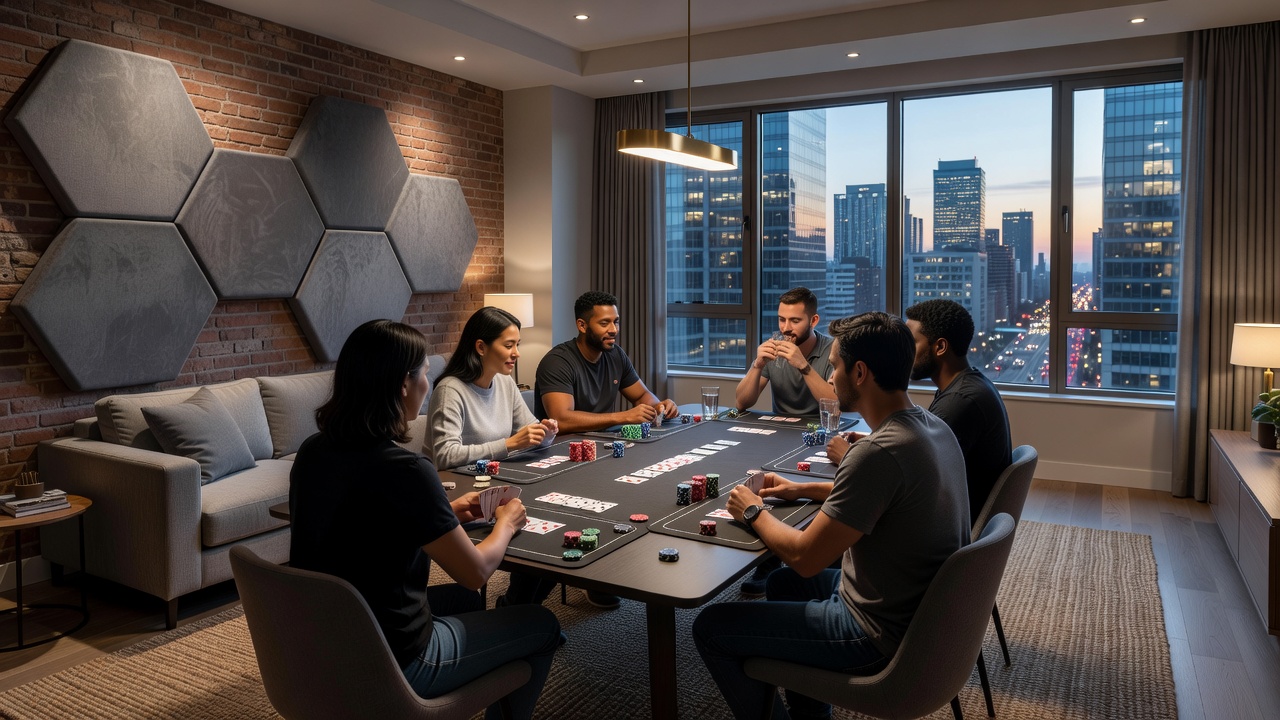
The Acoustic Advantages of Poker Mats in Apartment-Based Gaming Communities
Urban apartment dwellers who organize regular poker sessions often face challenges with sound transmission through shared walls and floors, and specialized poker mats have emerged as a practical solution that combines surface functionality wth acoustic dampening properties. These mats, constructed from layered felt, rubberized backings, and textured fabrics, absorb impact vibrations from chips and cards while creating a barrier that reduces the transmission of noise to neighboring units. Data from residential noise studies indicate that hard surfaces amplify clacking sounds by up to 15 decibels during extended play, whereas mats with dense underlayers lower those peaks through direct absorption and vibration isolation.
Material Composition and Sound Dampening Mechanics
Manufacturers source poker mats from combinations of polyester felt, neoprene cores, and anti-slip rubber bases that work together to convert kinetic energy from game pieces into minimal heat rather than audible waves. Research published in the Journal of Building Acoustics shows that mats exceeding 4 millimeters in thickness reduce airborne noise by 20 to 30 percent when placed over laminate or hardwood flooring common in city apartments. Observers note that players in groups of four to eight participants report fewer complaints from neighbors after switching to these surfaces, particularly during late evening sessions that extend past standard quiet hours enforced by many municipal building codes.
Challenges Specific to Dense Urban Environments
Apartment buildings constructed before 1990 frequently feature thinner partitions and less insulation, allowing sound to carry between units with minimal resistance. Gaming groups in such settings have documented instances where chip stacks and card shuffles generated disturbances that prompted formal noise complaints through property management channels. Those who study urban acoustics point to the cumulative effect of repetitive sounds over three to five hours, which registers as more intrusive than isolated events. Poker mats address this by providing consistent surface coverage that breaks the direct contact between game components and the table structure, thereby limiting the pathway for vibrations to travel downward or sideways through the building frame.
Practical Integration in Group Settings
Community poker organizers in cities such as Chicago and Toronto have incorporated mats into their standard equipment kits, citing measurable reductions in ambient sound levels during tournaments. One documented case involved a six-person group that transitioned from bare tables to full-coverage mats and recorded average noise readings dropping from 68 decibels to 52 decibels at a distance of one meter, according to handheld meter tests shared within local gaming forums. These adjustments align with broader guidelines from the U.S. Environmental Protection Agency on maintaining residential noise below 55 decibels during evening hours to preserve quality of life for all residents. Groups further enhance results by combining mats with padded chair legs and soft chip racks, creating a layered approach that addresses multiple sound sources simultaneously.

Equipment suppliers have responded by offering mats in modular sections that fit standard apartment dining tables without requiring permanent modifications. These designs allow groups to store components easily between sessions while maintaining acoustic performance across repeated setups. Figures from industry reports reveal that sales of sound-focused gaming surfaces increased 18 percent in North American metropolitan areas between 2024 and 2025, reflecting growing awareness among recreational players about compliance with lease noise clauses.
Long-Term Considerations for Sustained Use
Durability testing conducted by independent laboratories demonstrates that high-quality mats retain sound-absorbing characteristics after 200 hours of simulated play, provided they receive regular cleaning to prevent debris buildup that could alter surface texture. Participants in apartment-based leagues often rotate mat positions to distribute wear evenly, which sustains both acoustic benefits and visual appeal over multiple seasons. Data collected from user surveys in European gaming communities indicate similar patterns, with mats contributing to fewer neighbor disputes when sessions occur in buildings with strict sound regulations enforced by local housing authorities.
Conclusion
The integration of poker mats into urban apartment gaming represents a targeted response to acoustic challenges inherent in dense living arrangements, supported by material science principles and real-world application data. Groups that adopt these surfaces alongside complementary accessories achieve measurable noise reductions while preserving the social and strategic elements of play. Continued refinement in mat construction promises further improvements as manufacturers incorporate feedback from city-based players navigating shared-space constraints.