Regional Supply Networks for Sustainable Poker Accessories
Written by Jakob Schröder · Aug 13, 2026
Regional Supply Networks for Sustainable Poker Accessories
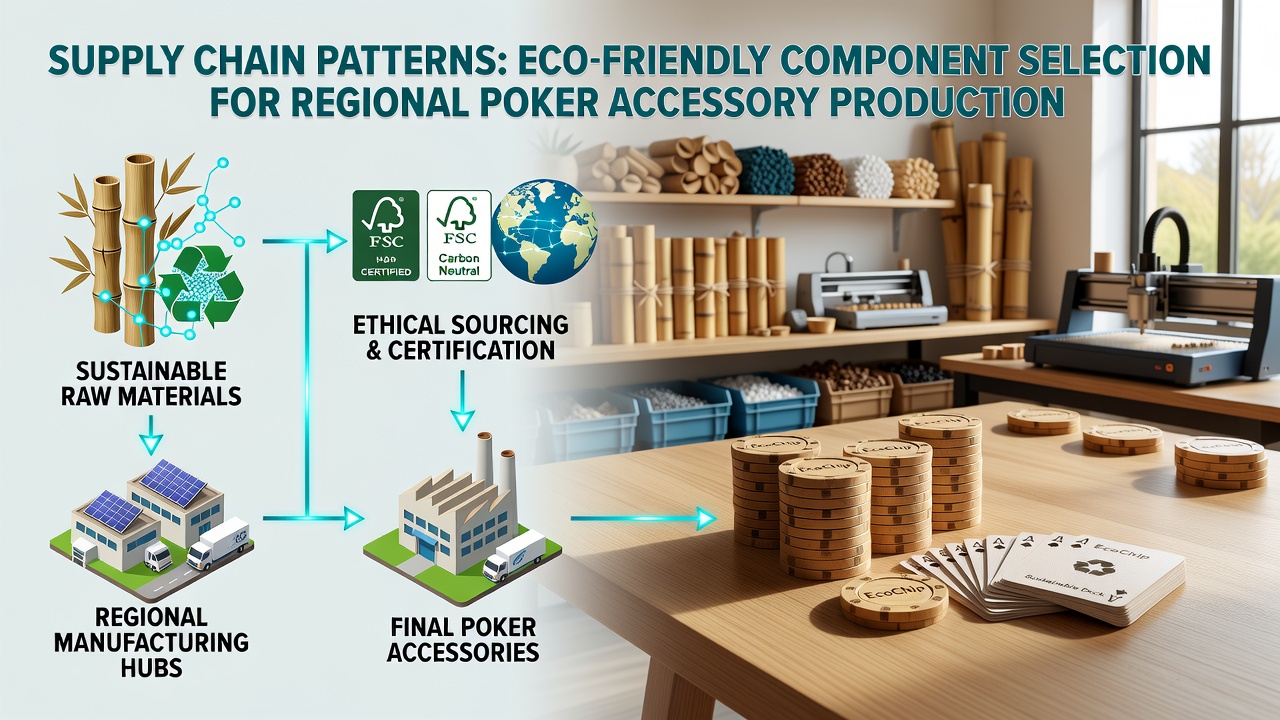
Regional manufacturers of poker accessories have shifted focus toward eco-friendly components over recent years, with supply chain patterns reflecting adjustments in material selection and sourcing strategies. Data from industry reports shows that producers in North America and Europe prioritize suppliers offering recycled polymers for chips and organic cotton blends for table mats, while facilities in Asia integrate bamboo-derived elements into card production lines. These patterns emerge from regulatory pressures and market demands for lower environmental impact, with observers noting steady increases in certified sustainable inputs since 2023.
Key Material Categories and Sourcing Routes
Component selection begins with raw material evaluation, where producers assess factors such as biodegradability and carbon footprint before committing to contracts. Recycled plastics form the base for many chip sets in regional setups, sourced primarily from post-consumer waste streams in the United States and Canada. Textile suppliers provide felt alternatives made from reclaimed wool or hemp, routed through European distributors that maintain traceability documentation. Researchers have documented how these routes reduce transportation emissions when manufacturers locate facilities near urban recycling hubs, and data indicates shorter lead times compared to virgin material imports.
Card stock follows similar patterns, with mills in Australia and New Zealand supplying paper products certified under forest management standards. Regional poker accessory firms often combine these with water-based inks to meet durability requirements without solvent use, and production schedules adjust around seasonal availability of agricultural byproducts used in coatings.
Regional Variations in Selection Criteria
Patterns differ across geographies based on local regulations and resource access. Facilities in the European Union emphasize compliance with circular economy directives, leading to greater adoption of modular designs that allow component reuse in later production cycles. North American operations, meanwhile, focus on energy efficiency metrics during manufacturing, selecting suppliers whose processes align with state-level emissions targets. In parts of Asia, emphasis falls on water conservation during dyeing and finishing stages for mats and felts.
August 2026 saw updated guidelines from the U.S. Environmental Protection Agency on sustainable plastics in consumer goods, prompting several regional producers to revise their approved vendor lists. U.S. Environmental Protection Agency guidelines highlight metrics for recycled content thresholds that directly influence poker chip formulations. Similar adjustments occurred among Australian manufacturers following updates to national packaging standards.
Logistics and Supplier Evaluation Processes
Supply chain mapping reveals that successful regional operations rely on tiered supplier networks, where primary vendors undergo third-party audits for environmental performance. Transport optimization plays a central role, with many firms consolidating shipments to minimize road and sea miles between component origins and assembly sites. Studies from university research programs have tracked how blockchain tracking systems improve visibility into material provenance, reducing instances of non-compliant substitutions.
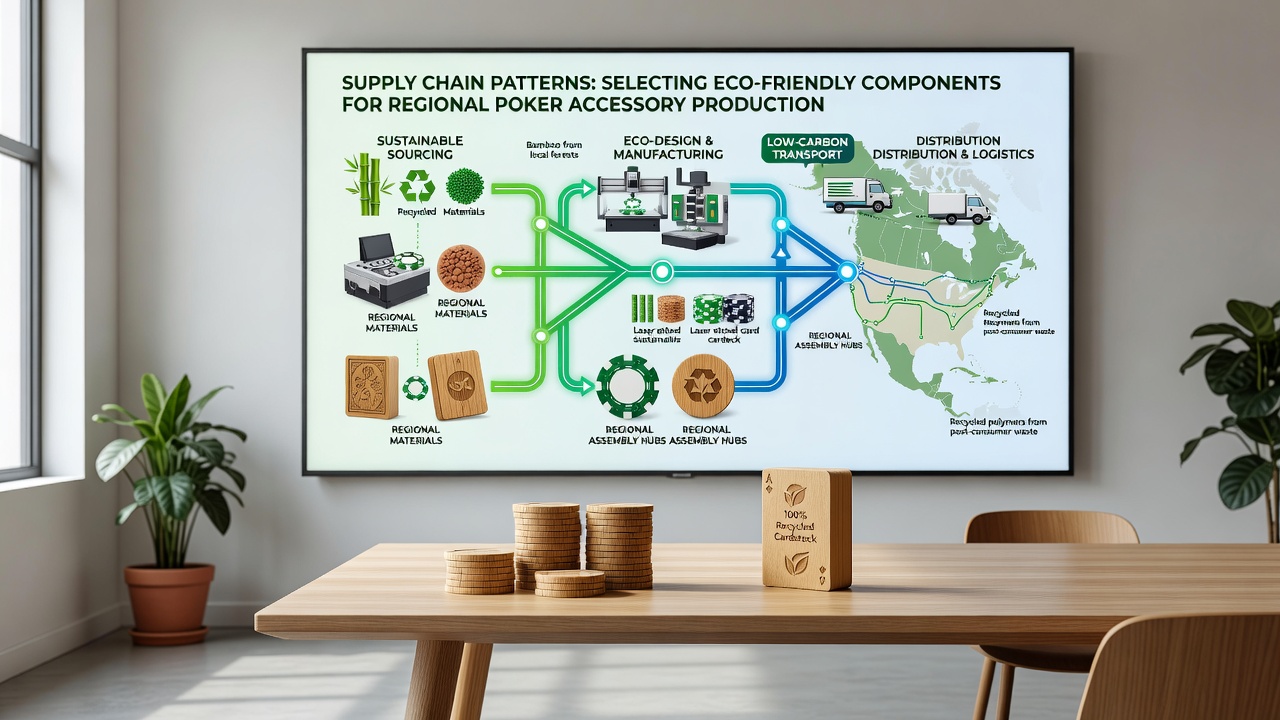
Those managing these networks often prioritize suppliers with established take-back programs for end-of-life components, creating closed loops that feed recycled content back into new batches. Evidence from trade association reports points to reduced material costs over multi-year contracts when such programs operate at scale, though initial setup requires coordinated planning across multiple partners.
Challenges in Scaling Eco-Friendly Production
Despite clear patterns toward sustainable sourcing, regional producers encounter constraints around consistent quality and volume availability. Certain bio-based resins show variability in performance under high-use conditions typical of poker accessories, prompting ongoing material testing protocols. Supply disruptions from weather events or policy changes have led some manufacturers to maintain dual sourcing arrangements, balancing certified eco-options with backup conventional streams during transition periods.
Cost structures also influence decisions, as eco-certified components carry premiums that regional operators offset through efficiency gains in assembly and reduced waste disposal fees. Data collected by international gaming equipment associations shows that firms investing in supplier development programs achieve more stable pricing over time compared to spot-market purchases.
Emerging Patterns and Future Directions
Recent analyses indicate growing integration of digital tools for demand forecasting, allowing regional poker accessory producers to align production volumes more closely with sustainable material inflows. Collaborative platforms among small and mid-sized manufacturers facilitate shared logistics and joint supplier negotiations, patterns that have expanded notably since 2024. Observers note that these approaches help maintain competitiveness while meeting evolving environmental standards across different jurisdictions.
Conclusion
Supply chain patterns in eco-friendly poker accessory production continue to evolve through coordinated material selection, regional regulatory alignment, and logistical refinements. Manufacturers adapt sourcing strategies to available certified inputs while addressing quality and volume challenges through diversified networks and technology adoption. These developments reflect broader shifts in manufacturing practices that prioritize traceability and reduced environmental impact across the sector.