Preserving Vintage Playing Cards as Collectibles in Poker Enthusiast Circles
Written by Willa Schröder · Jun 4, 2026
Preserving Vintage Playing Cards as Collectibles in Poker Enthusiast Circles
Collectors in poker enthusiast circles have turned their attention toward vintage playing cards as items that carry both historical value and practical ties to the game, with many seeking ways to maintain these decks for future generations. Decks produced before the mid-20th century often feature distinct paper stocks, lithographic printing methods, and designs that reflect the manufacturing standards of their eras, which sets them apart from contemporary mass-produced versions.
Historical Context and Growing Interest
Playing cards have formed part of poker culture since the game spread across the United States in the 19th century, and enthusiasts now document how specific manufacturers such as the United States Playing Card Company altered their processes over decades. Data from archival records show that decks from the 1920s through the 1940s frequently incorporated rag-content paper that responded differently to humidity than later wood-pulp formulations. Poker groups have begun cataloging these differences because older cards can reveal details about regional production runs and design variations that appeared during particular periods of the game’s expansion.
Material Composition and Factors Affecting Longevity
Vintage cards typically combine cotton or linen fibers with coatings that include clay and casein, while inks relied on mineral pigments rather than modern synthetic dyes. Researchers at institutions including the Smithsonian Institution have examined how exposure to light accelerates fading in these pigments, and temperature fluctuations cause the paper substrate to expand and contract. When relative humidity exceeds 60 percent for extended periods, mold spores can settle between layers of varnish, leading to discoloration that collectors work to prevent through controlled environments.
Storage and Handling Practices
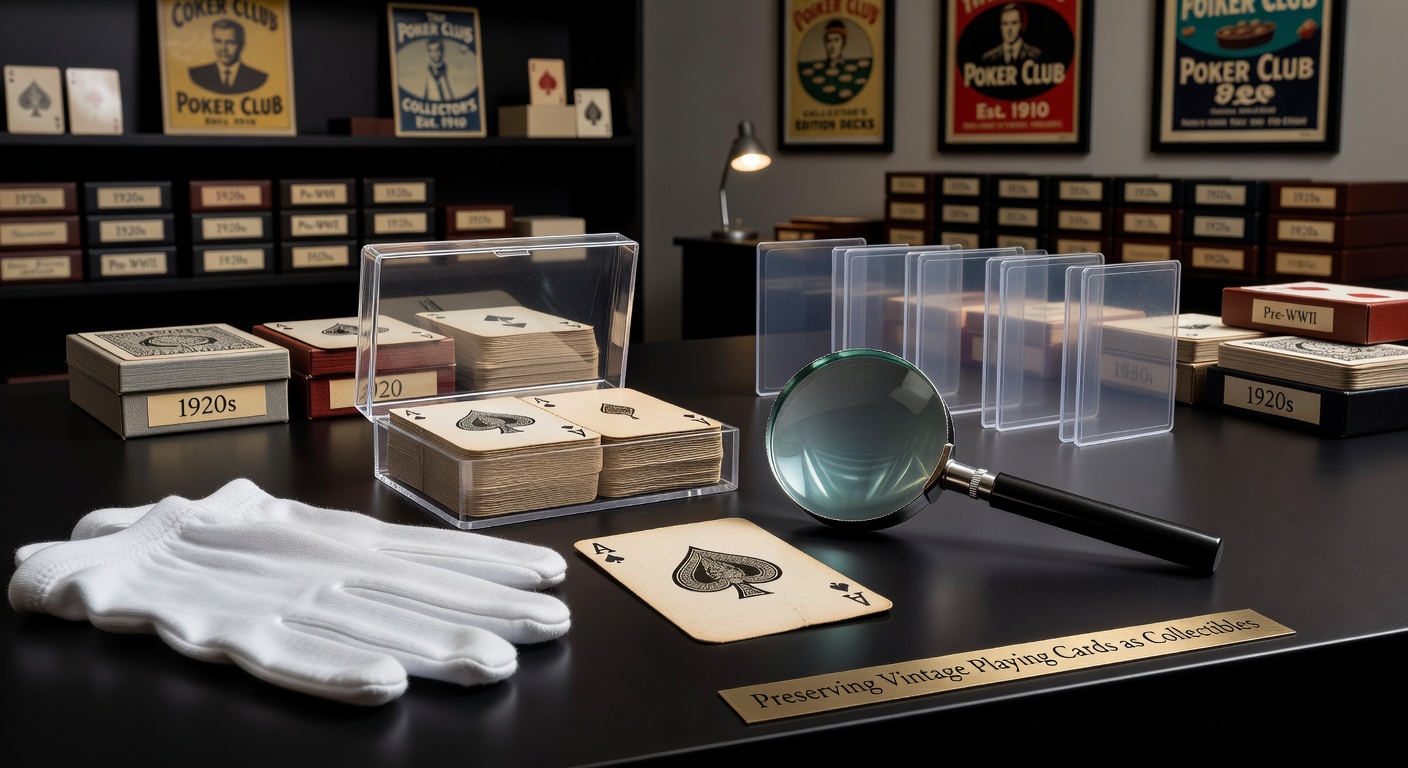
People who maintain collections store decks in acid-free boxes lined with archival tissue, keeping individual cards separated to avoid friction damage on edges and corners. Climate-controlled rooms maintained between 65 and 70 degrees Fahrenheit with 40 to 50 percent relative humidity represent the conditions recommended by conservation guidelines issued through various museum networks. Handling protocols include the use of cotton gloves to prevent oils from skin transferring to the surface, and many enthusiasts rotate displayed decks every few months so that no single card remains under constant light exposure.
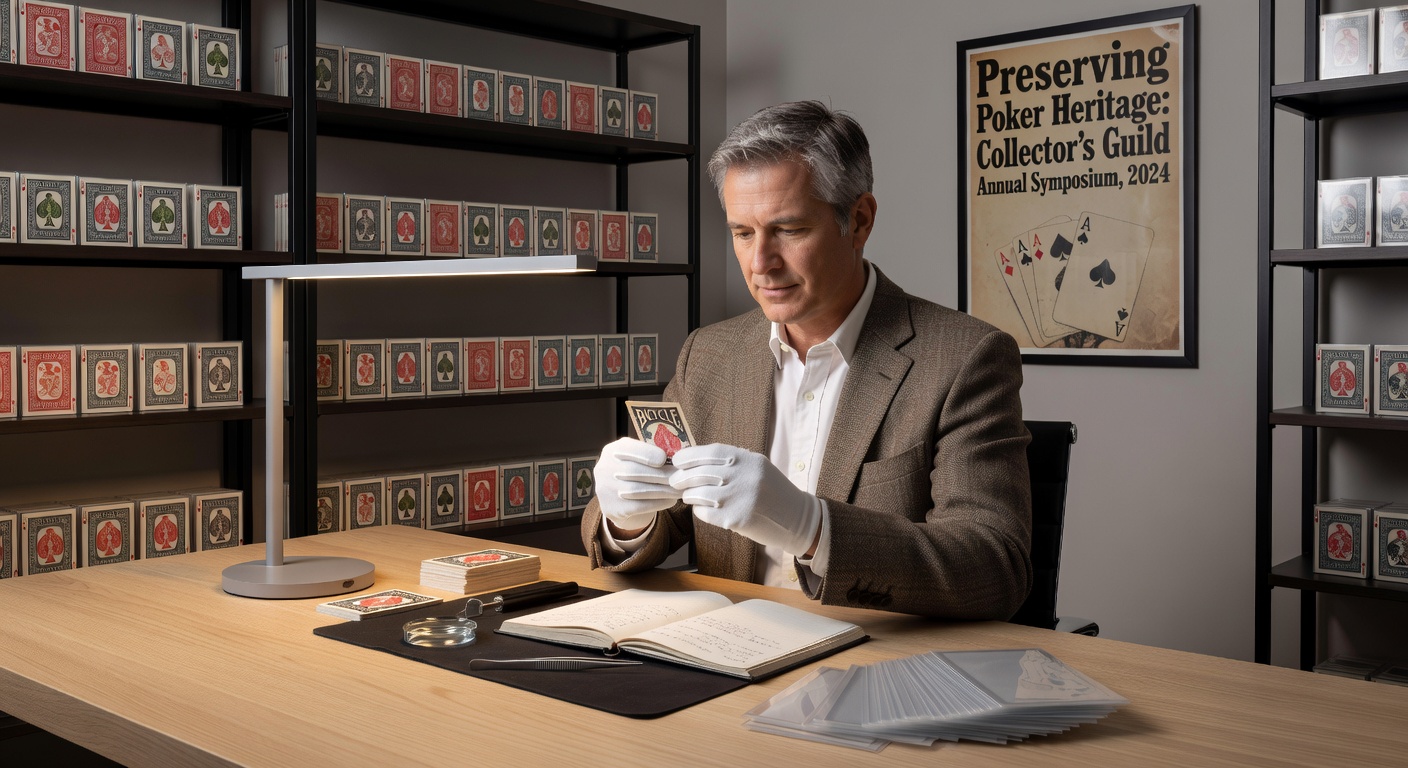
Digital documentation has become another standard step, with collectors photographing both sides of each card and recording measurements of thickness and weight that can indicate original manufacturing batches. These records prove useful when comparing decks that surface at auctions or estate sales, allowing enthusiasts to verify authenticity before purchase.
Community Networks and Knowledge Sharing
Poker circles dedicated to preservation often exchange information through regional clubs and online forums where members share case studies of decks that survived decades in varying conditions. One documented example involves a 1930s deck recovered from a dry attic that retained its original finish after simple surface cleaning and rehousing, whereas another set exposed to basement moisture required professional deacidification treatment. Organizations such as the International Playing Card Society publish findings from member surveys that track common preservation challenges across different climates, and these reports help new collectors anticipate issues specific to their geographic locations.
Integration with Broader Collecting Activities
Many participants combine card preservation with the study of poker history, cross-referencing deck designs against tournament records and rule books from the same eras. Events scheduled for June 2026, including several regional gatherings focused on gaming memorabilia, are expected to feature sessions on archival methods alongside displays of preserved decks. Participants at these meetings frequently discuss how material sourcing for replacement boxes and sleeves has shifted toward suppliers that meet conservation standards established by European research centers and North American university libraries.
Conclusion
Preservation efforts within poker enthusiast circles continue to draw on both historical research and practical techniques developed through ongoing collaboration. Collectors who apply consistent environmental controls, careful handling, and systematic documentation maintain the physical integrity of vintage decks while preserving the connection these items hold to earlier periods of the game.