Global Community Trends in Selecting Materials for Poker Kit Development
Written by Jakob Vogel · Jun 25, 2026
Global Community Trends in Selecting Materials for Poker Kit Development
Community groups across regions approach material selections for poker kits by evaluating factors such as durability, cost, and frequency of use, and these decisions often reflect local playing environments along with group size. Researchers have documented how urban leagues in North America tend to favor composite chip materials that withstand repeated handling, whereas rural collectives in parts of Asia prioritize lightweight plastic options for easier transport between venues. Data from industry reports indicates that felt surfaces for tables come in multiple textures, with groups in Europe often choosing speed cloth variants that reduce card friction during extended sessions.
Chip Material Preferences by Region
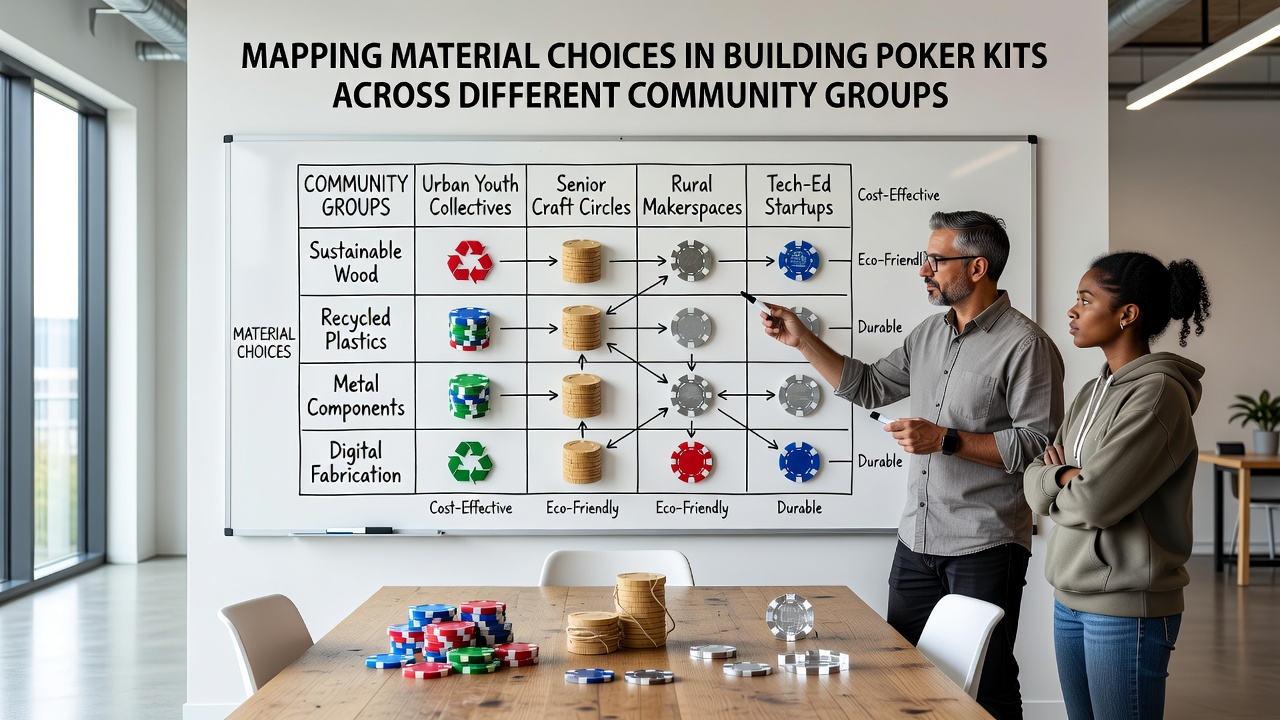
Clay-based chips appear frequently in professional-grade kits assembled by established tournament organizers, and these provide a substantial feel that many leagues associate with higher-end play, while composite alternatives combine resin wth metal inserts to achieve similar weight at lower production costs. Observers note that community groups in Australia frequently source chips through local suppliers who offer customization options, and this allows for color-coded sets tailored to specific game variants. In contrast, groups operating in Canadian provinces have turned toward recycled plastic composites, and evidence from manufacturing analyses shows these options maintain structural integrity over hundreds of sessions without significant chipping.
Groups in the Midwest United States commonly integrate weighted chips into their kits because the added mass helps prevent accidental movement during play, and this choice aligns with data from equipment testing that highlights stability benefits in high-traffic environments. Meanwhile, collectives in Southeast Asian communities often select smaller denomination chips made from lighter polymers, and this supports faster chip movement in cash games that run late into the night.
Table Surface and Mat Choices
Playing surfaces represent another key decision point, and different communities evaluate fabric density along with water resistance when building kits for repeated outdoor or indoor use. Speed cloth dominates selections among competitive leagues because its low-friction surface promotes consistent card sliding, whereas traditional felt remains popular in casual home groups that value the classic texture and sound during shuffles. Studies from gaming equipment labs reveal that groups meeting in humid climates, such as those along coastal Australia, tend to apply protective coatings to mats to extend usable life.
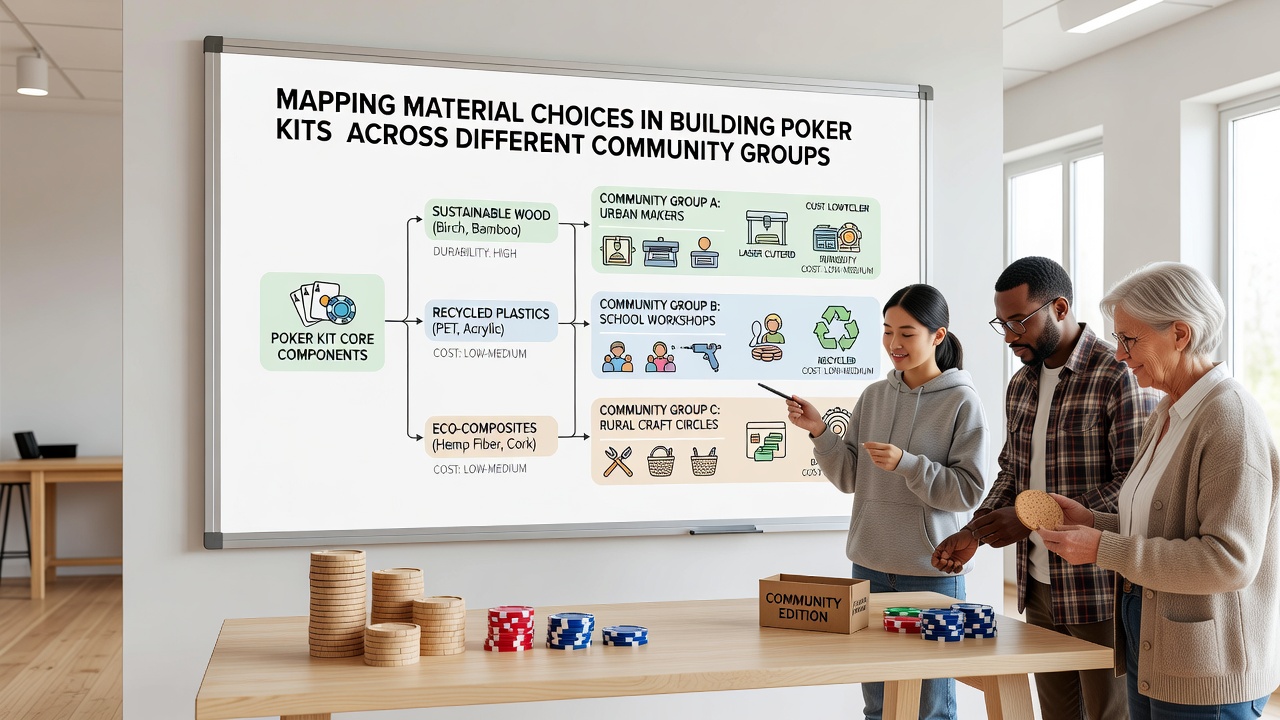
Modular mats that roll for storage appear regularly in kits assembled by traveling tournament circuits, and these designs allow groups to adapt setups quickly across multiple locations. European community organizations have adopted rubber-backed surfaces in recent years, and this addition reduces table slippage during intense betting rounds. Data collected through equipment surveys in June 2026 showed increased adoption of antimicrobial-treated fabrics among groups in densely populated urban centers, where shared equipment sees higher rotation among players.
Card Stock and Accessory Integration
Card materials range from standard paper stock to plastic composites, and community preferences often hinge on expected deck longevity plus handling characteristics. Plastic cards surface more often in kits built by high-volume leagues because they resist warping from humidity and repeated use, while paper cards continue to serve recreational groups that replace decks frequently to maintain freshness. Trade associations tracking gaming supplies report that groups in the United Kingdom integrate plastic cards with custom backs for branding purposes during regional events.
Additional components such as chip racks and card holders also vary by group, and metal racks appear in kits for larger tournaments because they organize higher volumes efficiently, whereas plastic trays suit smaller gatherings focused on portability. Observers have recorded that some collectives combine these elements with instructional materials on material care, and this practice helps sustain equipment across multiple seasons of play.
Conclusion
Material mapping across community groups reveals consistent patterns tied to practical needs, and these choices continue to evolve as new composites and treatments enter the market. Groups balance initial investment against long-term performance, and regional suppliers play a central role in shaping available options. Continued documentation of these selections provides useful reference points for emerging collectives seeking to assemble functional kits.