From Factory Floors to Living Rooms: The Journey of Poker Equipment Production Methods
Written by Jakob Vogel · Jul 21, 2026

From Factory Floors to Living Rooms: The Journey of Poker Equipment Production Methods
Production methods for poker equipment have evolved from basic industrial casting techniques used in the mid-20th century to integrated automated systems that supply both commercial casinos and residential setups, and observers note how these changes reflect broader shifts in manufacturing efficiency and material science. Early chip production relied on clay composites molded under high pressure, whereas contemporary facilities employ injection molding machines that handle polymers at rates exceeding several thousand units per hour according to industry reports from the Gaming Standards Association.
Early Manufacturing Approaches in Poker Equipment
Facilities in the 1950s and 1960s focused on clay and ceramic blends for chips, pressing them into molds that created the distinctive weight and texture players still associate with classic sets. Card production followed parallel paths where paper mills supplied stock that printers laminated with plastic coatings to resist wear during extended sessions. Table felt emerged from textile mills that wove wool blends treated with chemical finishes to control card slide, while workers assembled chip racks from basic wood or metal frames cut on standard lathes and presses. These methods emphasized manual inspection at each stage, and data from manufacturing archives shows error rates dropped as operators gained experience with consistent batch sizes.
Automation and Material Advances in Modern Plants
Contemporary factories integrate robotic arms that position blanks for engraving and coloring, which allows precise customization without slowing throughput. Polymer formulations now include additives that increase chip durability while maintaining the feel of traditional clay, and extrusion lines produce continuous lengths of felt backing that cutters divide into custom table sizes. Shuffler mechanisms incorporate sensors calibrated to detect card thickness variations, and assembly lines test each unit through randomized deck cycles before packaging. Researchers at institutions tracking industrial trends have documented how these automated lines reduce material waste by up to 30 percent compared with older manual processes, while maintaining tolerances measured in fractions of a millimeter.
Supply Chain Shifts and Home Market Demand
Material sourcing has moved toward suppliers offering recycled composites and low-VOC finishes that meet both regulatory standards and consumer preferences for sustainable products. Plants coordinate with logistics networks that ship components directly to smaller distributors serving residential buyers, and this integration supports the rise of home configurations featuring weighted chips alongside textured mats. Production volumes increased noticeably during periods when recreational play expanded, with July 2026 figures from regional trade data indicating sustained output for accessory kits that pair instructional guides with automated devices. Facilities adjust mold designs seasonally to accommodate regional preferences, such as heavier chips favored in certain North American markets versus lighter sets common in Asian distribution channels.
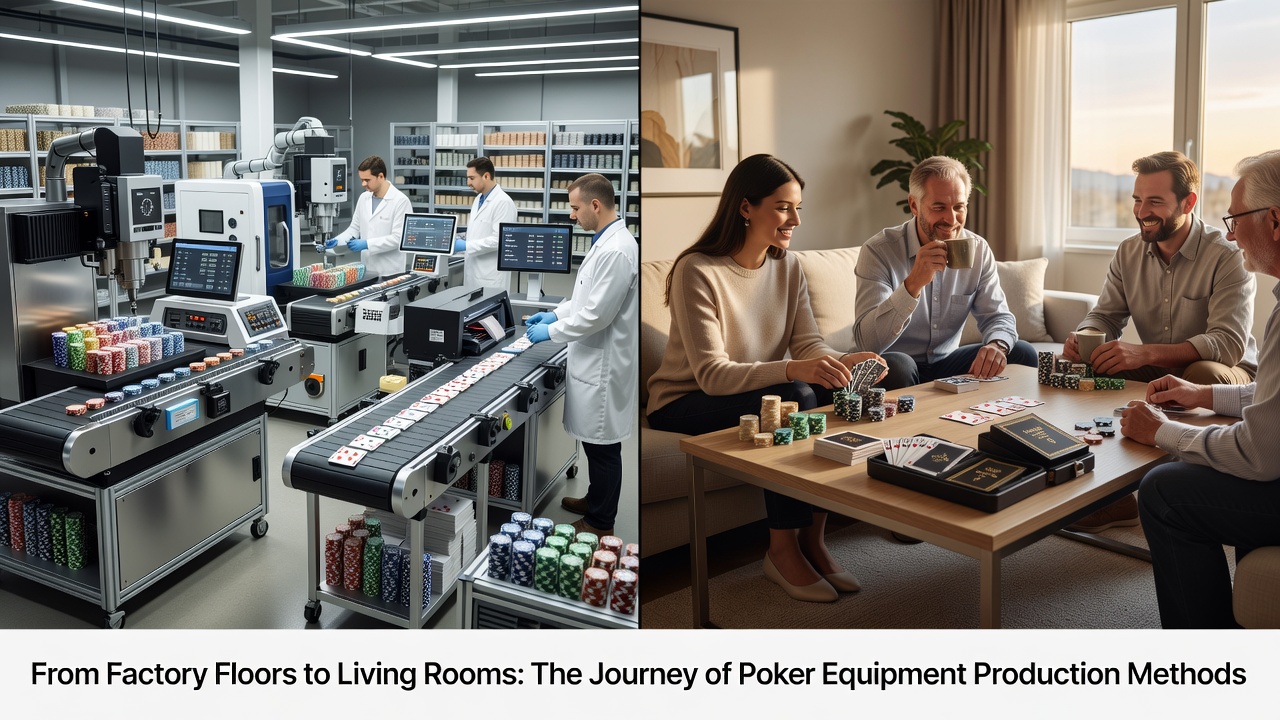
Quality control protocols now include multi-stage scanning that flags surface imperfections invisible to the naked eye, and these checks extend to final packaging where humidity controls protect felt adn cards during transit. Engineers have refined cooling cycles in molding equipment to prevent warping that once affected early polymer chips, and the result is equipment that withstands repeated use in both tournament halls and living room settings without degradation in performance metrics.
Integration of Technology in Production Lines
Computer-aided design software guides the creation of custom table layouts and chip denominations, allowing rapid prototyping before full-scale runs begin. Laser etching replaces older stamping methods for adding logos or edge spots, which produces cleaner results on high-volume orders. Sensor arrays embedded in shuffler housings undergo calibration against standardized decks, and test data confirms randomization patterns align with specifications required for regulated play environments. Observers note that these technological layers connect factory output directly to end-user expectations for consistency across sessions lasting several hours.
Regional Production Variations and Standards
Manufacturing clusters in North America emphasize high-precision automation suited to large casino contracts, while European facilities often incorporate modular lines that switch between consumer and commercial specifications with minimal downtime. Australian suppliers have adopted water-based finishing processes that reduce solvent emissions, aligning with local environmental guidelines tracked by industry monitoring groups. These regional differences influence final product characteristics, such as felt thickness or chip edge profiles, yet all adhere to core durability benchmarks established through standardized testing protocols.
Conclusion
The progression from labor-intensive molding to sensor-driven assembly reflects ongoing adaptation in poker equipment manufacturing, and production data continues to track how these methods support expanding residential markets alongside established commercial channels. Facilities maintain focus on material consistency and functional reliability, ensuring equipment transitions smoothly from industrial output to everyday home use.